
The August 2026 flood: what happened on the Bhote Koshi
Aaron and Debbie Cuha, October 5, 2026, updated Invalid Date. 4 min read.
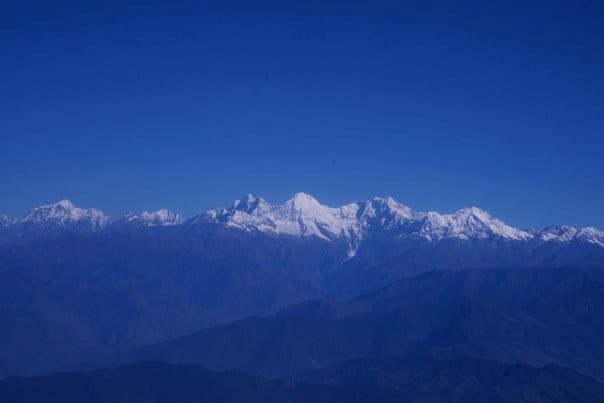
If you have followed our work in Nepal, you know the road from Kathmandu up to the Tibet border. It runs along the Trishuli, then the Bhote Koshi, through Syabrubesi and Timure to the crossing at Rasuwagadhi. On August 26, 2026, a flood ran the length of that corridor. Here is what happened, with every fact drawn from the sources at the end.
What happened and when
Early that morning a huge slab of rock and glacier ice broke off the north face of Langtang Lirung, a 7,227 metre peak in Rasuwa district near the China border. ICIMOD, the regional mountain research body, says it fell about 1,200 metres into the Lhende Khola valley and became a fast moving debris flow of mud, rock and ice. No heavy rain was involved. Gauges show nothing that could explain a flood of this size.
Nepal's disaster authority, NDRRMA, puts the source about 20 km upstream of Rasuwagadhi and says roughly one square kilometre of rock and glacier material came loose at about 08:40. The Nepal Red Cross Society's early assessment said the ice avalanche may have blocked the Lhende River and then let go, sending a sudden outburst flood into the Bhote Koshi.
The river gauge at Syabrubesi stopped sending data at about 08:50. By 09:15 the hydrology department had confirmed a major flood wave and sent warnings down the Trishuli. The Red Cross estimated waves of 8 to 10 metres in some places. The water reached Galchhi at 10:28, Malekhu at 11:50 and Mugling at 13:00.
Where it hit
The first places in the path are the ones you may know from our trips. The Nepal Red Cross reported severe damage to Timure Market, the Timure customs office, the Rasuwagadhi area and the Syabrubesi settlement, plus three police posts and the Chilime hydropower project. The Kathmandu Post reported that the Timure helipad was swept away, so rescue helicopters could not land in the first hours.
From there the water ran down the Trishuli through Nuwakot and Dhading toward Chitwan.
Homes, roads and the border crossing
The numbers are hard to read. As of October 2, the Nepal Red Cross Society counted 1,453 people dead, 5,550 still missing and 13,795 rescued, with 8,317 affected households, about 32,963 people. The Kathmandu Post reports more than 7,500 houses damaged or destroyed across Rasuwa, Nuwakot and Dhading.
Roads and bridges went with the houses. NDRRMA reports 41 motorable bridges washed away and four more damaged. The Kathmandu Post puts road damage at about 40 kilometres, including the Trishuli to Betrawati road, the main route into Rasuwa, and the road from Syabrubesi through Goljung and Gatlang to Chilime. The Nepal to Tibet road link was cut, and about 80 Nepali truck drivers were stranded on the Chinese side at Kerung.
The WHO reported three health posts fully destroyed and one hospital partly damaged.
What relief looked like
For the first days, relief meant helicopters. NDRRMA's September 1 report says 3,702 households, about 14,461 people, in Gosaikunda and Amachhodingmo rural municipalities had no road, power or phone service for up to six days. Some 21,011 security personnel from Nepal, India, China and Korea were deployed for search and rescue.
Supplies piled up faster than they could move. By early September Dhunche, the district headquarters, held 36,000 kg of rice and 13,000 kg of lentils waiting for flights. One ward chairman waited three days there with 250 sacks of rice before a helicopter could take it. The government logged 173 relief flights.
The Nepal Red Cross set up five emergency camps, handed out tarpaulins, blankets, rope, first aid kits, food and water, ran a generator so people could charge phones, and sent 141 trained volunteers for body recovery, psychosocial first aid and family tracing. The UN says its joint response reached more than 64,000 people, with helicopters serving more than 1,600 households cut off by road, under a US$49.6 million flash appeal launched September 4.
Why rebuilding takes months
Three reasons. First, the monsoon. The UN said rain threatened the flight schedule, and NDRRMA warned that temporary lakes, unstable banks and new debris flows remained a live risk. Second, access. With the road gone, every bag of cement flies in or waits for a bridge. Third, where. The government is looking for safe sites outside the flood zone, and a Post Disaster Needs Assessment is under way. By September 30, about 1,000 of the roughly 4,500 people in temporary shelters remained, and no family had yet received the promised Rs15,000 monthly rent support. Winter is coming to upper Rasuwa. The UN estimates 2.2 million tonnes of debris still need clearing.
Where C4GC fits
Some of the grown Rainbow House kids and friends of the Center for Global Change lost family members and homes in this flood. We are not a big agency. We are two people who spent eighteen years with these families, and we can do one concrete thing well. From October 11 to 18 we are running 120 km each in the MDS Trek Morocco to raise the money to rebuild one family home in March 2027, after the monsoon.
If you want to help, you can donate here. If you have skills or time to offer for the March rebuild, tell us here.
Sources
- Nepal Red Cross Society: Rasuwa Flood Situation Update, 26 August 2026
- Nepal Red Cross Society: Rasuwa flood response highlights
- NDRRMA: Rasuwa-Bhotekoshi Flood Situation Report 01, 1 September 2026 (PDF)
- ICIMOD: Kyirong-Rasuwa Flood 2026
- WHO Nepal: 2026 Rasuwa flash floods
- UN in Nepal: One Month Since the Rasuwa Floods
- British Red Cross: Nepal flash floods 2026
- Kathmandu Post: Flash flood hits Rasuwa, damages hydropower projects and markets
- Kathmandu Post: Washed-out bridges force flood-hit communities to rely on choppers
- Kathmandu Post: Nepal weighing options to relocate Bhotekoshi flood survivors
- Kathmandu Post: Dhunche has relief supplies. Getting aid to flood-hit Rasuwa villages is the problem
- Kathmandu Post: Bridges gone, roads damaged, villages cut off from relief
- Kathmandu Post: Nepal flood survivors are leaving temporary camps as government delays rehabilitation